
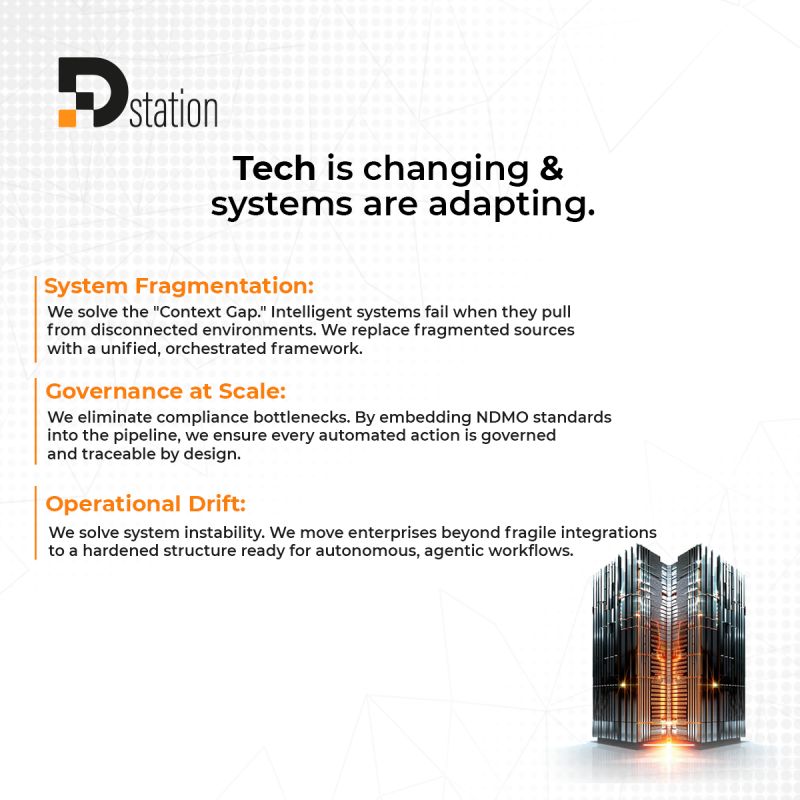
Technology moves fast, and the systems around it have to keep pace. Three forces shape whether an organization keeps up or falls behind: fragmentation, governance, and drift. Each one creates a different kind of risk and each one has a fix.
Fragmentation: Connecting Systems to Close the Context Gap
Disconnected systems create a “context gap.” One tool holds part of the story, another tool holds the rest, and no single system shows the full picture.
Why Disconnected Systems Create Blind Spots
When data lives in separate silos, teams lose the context they need to make fast, accurate decisions. A support ticket doesn’t connect to the account history. A compliance flag doesn’t connect to the workflow that triggered it. Each gap adds risk and slows response time.
Closing the Gap Through Connected Systems
Connecting systems means data flows between tools automatically, so context travels with it. Teams see the full picture in one place instead of piecing it together from five different screens.
Governance: Automating NDMO Rules to Keep Actions Safe and Tracked
Saudi Arabia’s National Data Management Office (NDMO) sets strict rules for how organizations classify, manage, and protect data. Meeting those rules manually is slow and easy to get wrong.
The Manual Governance Problem
Manual governance depends on people remembering to apply the right rule at the right moment. Under NDMO’s data classification and protection requirements, a missed step can mean unsafe data handling or an untracked action.
Automating NDMO Compliance Rules
Automated governance applies NDMO rules directly inside your workflows. The system checks classification, access, and handling requirements as actions happen not after the fact so every action stays safe and tracked by design.
Drift: Replacing Weak Links With Strong, Automated Workflows
Over time, manual processes drift. A step gets skipped here, a workaround gets added there, and the original process barely resembles what it used to be.
How Weak Links Creep Into a Process
Drift usually starts small: someone finds a faster shortcut, a handoff gets missed, or a tool goes unused because it’s inconvenient. Each weak link seems minor on its own, but together they erode reliability.
Strengthening the Chain With Automation
Automated workflows remove the guesswork. Instead of relying on someone to remember every step, the system enforces the process the same way every time replacing weak, manual links with a strong, consistent chain.
Adapting Without Losing Control
Fragmentation, governance, and drift all point to the same underlying challenge: as technology changes faster, manual processes can’t keep up. Connected systems close the context gap, automated governance keeps NDMO rules enforced consistently, and automated workflows replace the weak links that manual processes leave behind. Together, they let your organization adapt without losing control.